This article contains affiliate links. If you click through and make a purchase, I may earn a small commission at no extra cost to you. Full disclosure.
If you’re buying a home in Florida, homeowners insurance is one of the most important factors you’ll deal with. It’s not just a checkbox in the closing process. It’s a significant ongoing cost that can affect what you can actually afford and where you can realistically buy.
This guide covers what makes Florida insurance different, what it actually costs in 2026, how to navigate the market, and the strategies that can save you significant money.
Why Florida Insurance Is Different
Florida homeowners insurance has become a national headline topic for a reason. The state faces a unique combination of factors that make insurance more expensive and more complicated than almost anywhere else in the country.
Hurricane risk: Florida experiences more hurricane landfalls than any other state. Every coastal community lives with this reality.
Flood exposure: Even inland Florida communities can face significant flood risk due to heavy rainfall, storm surge, and rising water tables.
Roof damage claims: Florida’s intense sun, heat, and storm exposure means roofs deteriorate faster than in cooler climates. Roof age dramatically affects insurance availability and cost.
Litigation history: For years, Florida had a problem with excessive litigation around insurance claims, which drove premiums up across the state. Recent reforms have addressed some of these issues.
Insurer departures: Several major national insurers have stopped writing new policies in Florida or left the state entirely, reducing options for homeowners.
What Florida Insurance Actually Costs in 2026
The average annual premium for Florida homeowners insurance ranges significantly depending on location, but several reliable benchmarks emerge from 2026 data:
Statewide averages: Most sources report Florida averages between $3,800 and $11,759 per year, with the wide range reflecting how dramatically prices vary by location.
Regional breakdown (approximate ranges for $300,000 dwelling coverage):
- Miami-Dade County: $5,300 to $7,500 annually
- Tampa Bay / St. Petersburg: $4,000 to $5,800 annually
- Orlando / Lake County: $2,200 to $3,400 annually
- Inland Florida markets (like Ocala): $1,800 to $2,400 annually
- Coastal South Florida luxury: $14,000 to $20,000+ annually
For comparison, the national average is approximately $2,377 for the same coverage. Florida policies typically cost 3 to 5 times the national average.
What’s Included in a Standard Florida Policy
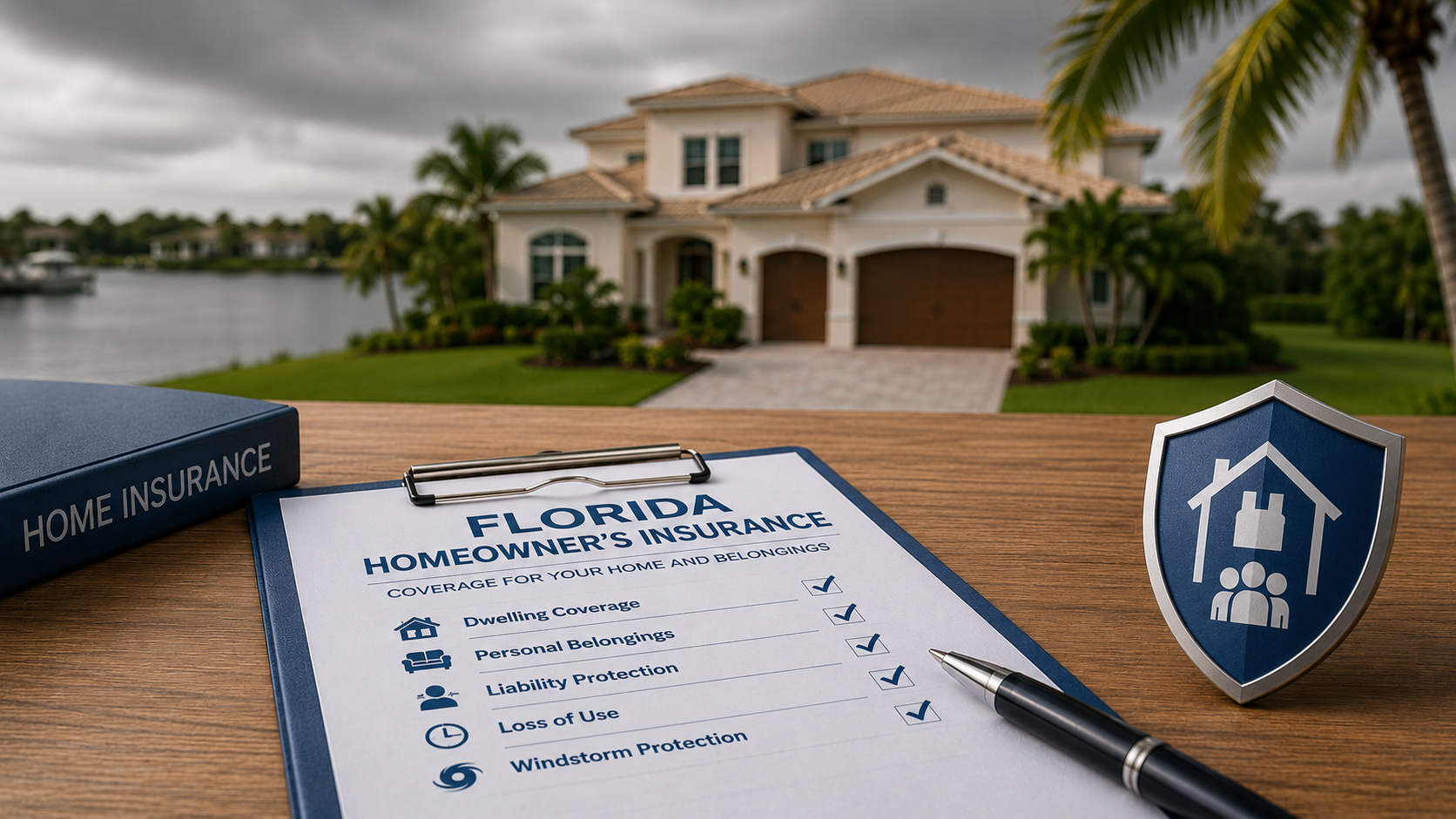
A typical Florida HO-3 policy covers:
- Dwelling coverage: Repair or rebuild your home if damaged
- Other structures: Sheds, fences, detached garages
- Personal property: Your belongings inside the home
- Loss of use: Living expenses if you can’t live in the home during repairs
- Personal liability: If someone is injured on your property
- Medical payments: For minor injuries to guests
- Wind and hail damage: Including hurricane wind damage (with separate deductible)
What’s NOT covered in standard policies:
- Flood damage: Always requires separate flood insurance (NFIP or private)
- Earthquake damage: Rare in Florida but excluded
- Mold: Often limited or excluded, with conditions
- Pool liability: May require additional coverage
- Some natural events: Subsidence, sinkholes (separate coverage often required)
The Hurricane Deductible: A Major Florida Wrinkle
Unlike most states, Florida policies have a separate deductible specifically for hurricane damage. This works very differently from your standard deductible.
How it works:
- Standard deductible: typically $1,000 to $2,500 for non-hurricane damage
- Hurricane deductible: typically 2% to 10% of your dwelling coverage
On a $400,000 home with a 2% hurricane deductible, you’d pay $8,000 out of pocket before insurance pays for hurricane damage. On a 5% deductible, you’d pay $20,000.
Many Florida homeowners are caught off guard by this. Always know exactly what your hurricane deductible is and make sure you can financially handle it.
Flood Insurance: Why You Probably Need It
This is the most commonly overlooked Florida insurance issue. Standard homeowners insurance does NOT cover flood damage. Period.
Even if you’re not in a flood zone:
- 25% of flood damage claims happen in areas considered low risk
- Heavy rainfall can cause flooding anywhere
- Sewer backups during storms can cause significant damage
- Florida’s water table can rise dramatically during storms
Flood insurance options:
- National Flood Insurance Program (NFIP): The federal program, with coverage limits of $250,000 for dwelling and $100,000 for contents
- Private flood insurance: Often more flexible, sometimes cheaper, with higher coverage limits
Important 2026 development: Citizens Property Insurance now requires flood coverage for many policyholders, phased in by home value (homes with $400,000+ replacement cost now require it).
For most Florida homeowners, flood insurance isn’t optional in any practical sense. The cost of one significant flood event without coverage would be financially devastating.
Citizens Property Insurance: The Insurer of Last Resort
Citizens Property Insurance, is a Florida state-backed insurance company, created to provide coverage for homeowners who can’t find insurance in the private market.
Important facts about Citizens:
- It’s typically more expensive than private market options
- It’s often the most expensive coverage available (average rates over $7,200 annually)
- Coverage may be more limited than private policies
- The state has been working to depopulate Citizens by moving policies to private insurers
If you end up with Citizens, it’s because no private insurer would write your policy at any price. Working to qualify for private insurance over time can save significant money.
Good news for 2026: Citizens is reducing rates an average of 8.7% statewide in 2026, with some South Florida counties seeing cuts of up to 14%. Private insurers are also filing rate decreases, suggesting the market is recovering.
💡 Want the complete picture?
My free First-Time Homebuyer Guide covers everything you need to know before buying your first home — credit prep, financing, common mistakes, and the step-by-step buying process.
How to Reduce Your Florida Insurance Costs
Despite the challenging environment, several strategies can meaningfully reduce your premiums.
Wind Mitigation Inspection
This is the single most valuable thing most Florida homeowners can do. A wind mitigation inspection costs $75 to $150 and is valid for five years. It documents features of your home that resist wind damage:
- Roof shape and construction
- Roof attachment methods
- Roof-to-wall connections
- Opening protection (impact windows, shutters)
- Roof age and condition
Each qualifying feature can earn premium discounts. Some homeowners save 30% to 50% on their wind portion of premium through mitigation credits.
Roof Considerations
Insurance and roofs have become deeply intertwined in Florida:
- Most insurers won’t write policies on roofs older than 15 to 20 years
- Newer roofs (under 5 years) qualify for the best rates
- Metal roofs and roofs with hurricane straps qualify for additional discounts
- Tile roofs often have different rate structures than shingle roofs
If your roof is approaching 15 years old, replacing it can significantly affect your insurance options and costs.
Impact Windows and Shutters
Adding hurricane protection to openings can reduce premiums substantially:
- Impact-resistant windows
- Storm shutters (accordion, panel, or roll-down)
- Hurricane fabric protection
The investment can pay back over time through reduced premiums, plus the obvious benefit of protecting your home during storms.
Shop Carriers Regularly
Florida insurance is incredibly variable carrier to carrier. The same home can have premiums varying by thousands of dollars between insurers. A good Florida insurance agent can shop multiple carriers and often find 10% to 25% savings just by re-shopping.
Increase Your Deductible
If you can afford a higher out-of-pocket cost in an event, raising your deductible reduces your premium. Just make sure you can actually pay that deductible if a claim happens.
Bundle Policies
Combining home, auto, and umbrella insurance with one carrier often produces meaningful discounts.
Address Claims History
If you’ve filed insurance claims in the past, your rates are affected. Avoid filing claims for minor issues. The Florida average premium for someone with a clean five-year claims history is $10,384. File one claim and that jumps to $12,037.
What This Means When Buying a Home
Florida homeowners insurance affects your homebuying decisions in several important ways.
Factor It Into Your Budget From the Start
Before you start looking at homes, get an insurance estimate for the type of property and area you’re considering. A $400,000 home in coastal Miami-Dade might cost $7,000+ to insure annually, while the same priced home inland might cost $2,500.
Get an Insurance Quote BEFORE You Close
Don’t wait until the last minute. Get insurance quotes early in the process so you know what to expect. In some cases, insurance issues can derail closings.
Pay Attention to Roof Age
If you’re considering an older home, check the roof age. Roofs over 15 years old can:
- Make insurance harder to obtain
- Result in much higher premiums
- Require replacement before some insurers will write policies
Negotiate roof replacement or credits if buying a home with an aging roof.
Understand Flood Zones
Check the FEMA flood maps for any property you’re considering. Properties in flood zones X may not require flood insurance, but those in zones A, AE, V, or VE typically do. Flood insurance can add $500 to $3,000+ annually to your costs.
Consider Insurance When Choosing Location
If you’re somewhat flexible on location, inland Florida markets typically have significantly lower insurance costs than coastal markets. This can change your total monthly cost dramatically.
Working With a Florida Insurance Agent
A good local insurance agent provides value worth their commission, especially in Florida’s complex market.
A quality agent will:
- Shop multiple carriers on your behalf
- Explain coverage options clearly
- Help you understand mitigation discounts
- Re-shop your coverage at renewal
- Help with claims if events occur
When choosing an agent, look for one who:
- Works with multiple carriers (not just one)
- Specializes in your area of Florida
- Has positive reviews from local clients
- Explains things clearly rather than rushing you to a decision
Final Honest Take
Florida insurance is expensive, complicated, and important. But it’s manageable with knowledge and planning.
The key takeaways:
- Factor insurance into your budget from the start — don’t make it an afterthought
- Get quotes early in the homebuying process — before falling in love with a specific home
- Consider roof age, location, and construction features when shopping
- Always carry flood insurance even if not required
- Get wind mitigation inspections to qualify for discounts
- Shop carriers periodically — the market is variable
- Work with a knowledgeable Florida insurance agent
Florida remains a wonderful place to own a home despite the insurance challenges. The cost is real, but it’s a known quantity you can plan for. The buyers who do best are those who understand the landscape, shop smart, and choose properties that fit their insurance budget alongside their mortgage budget.
If you’re considering buying a Florida home, start the insurance conversation early. It’s one of the most important pieces of your homebuying puzzle, especially in 2026’s complex market.
Get Your Free First-Time Homebuyer Guide
A practical 13 page guide covering everything you need to know before buying your first home. No fluff, just useful information from a licensed Florida real estate agent.
Get the Free Guide →
Leave a Reply