This article contains affiliate links. If you click through and make a purchase, I may earn a small commission at no extra cost to you. Full disclosure.
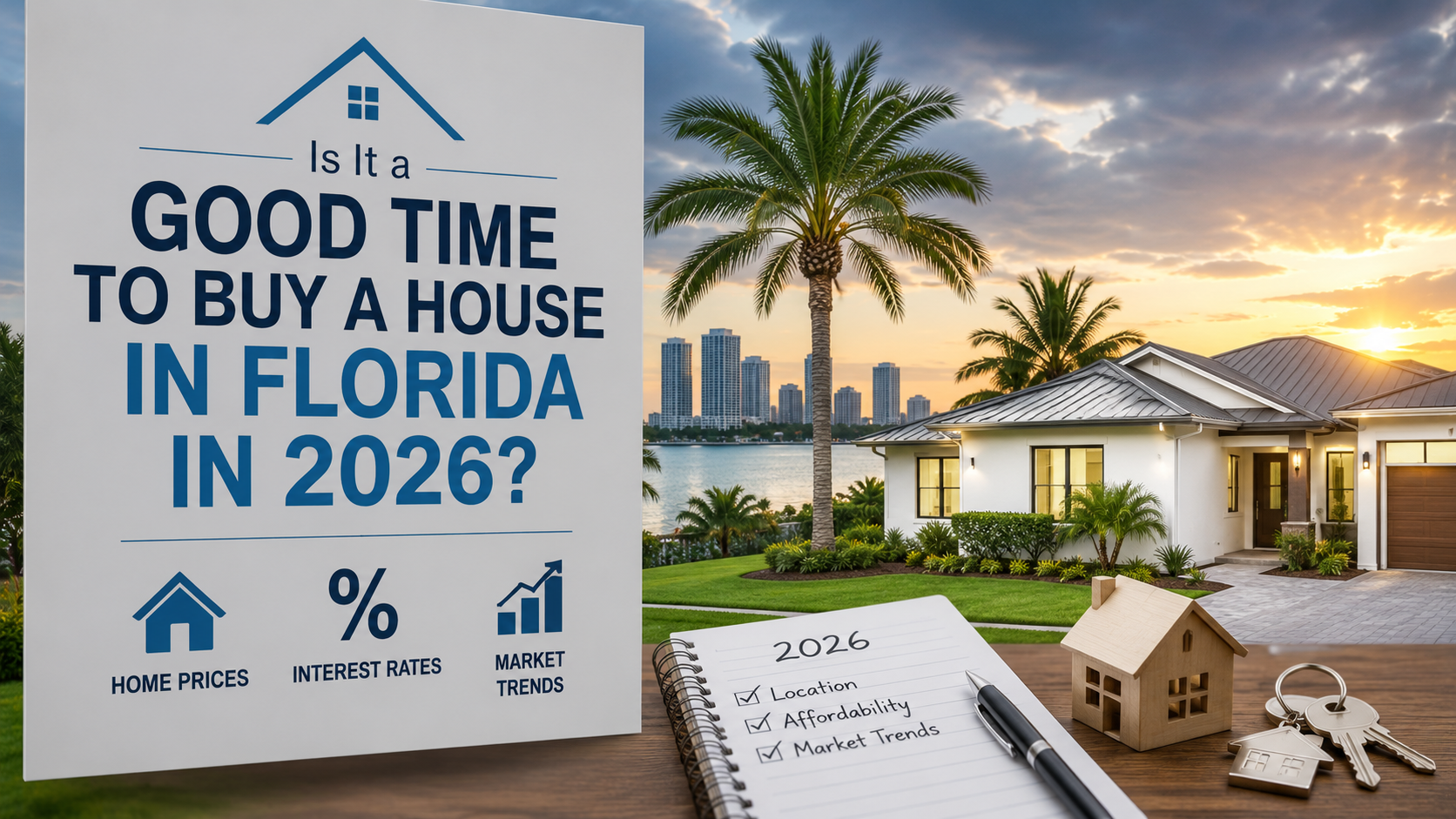
This is the most searched real estate question online, and for good reason. Buying a home is one of the largest financial decisions most people ever make, and timing matters. So let’s answer it honestly for Florida buyers in 2026.
The short answer: it depends on your situation, not the calendar. The honest answer requires looking at multiple factors that affect whether buying makes sense right now for you specifically.
What’s Actually Happening in Florida Real Estate in 2026
The Florida market in 2026 looks very different from the frenzied seller’s market of 2021 to 2023. Here’s the current landscape:
Inventory is recovering. After years of severely limited supply, more homes are listed in most Florida markets. This gives buyers more options and more negotiating power than they’ve had in years.
Prices are stabilizing. Florida home prices aren’t crashing, but the runaway appreciation has slowed significantly. In some markets prices have flattened or slightly declined. Other markets continue to see modest growth.
Mortgage rates remain elevated. Rates settled into a higher range compared to the historic lows of 2020 and 2021. Many buyers are getting used to this new normal rather than waiting for rates to drop dramatically.
Insurance costs are a major factor. Florida homeowners insurance has become one of the most significant homebuying considerations, especially in coastal areas.
Markets vary dramatically by location. Tampa, Orlando, Miami, Jacksonville, and the smaller inland markets all have different dynamics. There’s no single “Florida market.”
The Questions That Actually Matter
Rather than focusing on whether the market is “good,” ask yourself these questions:
Question 1: How Long Will You Stay?
If you’re planning to live in the home for 5 or more years, short-term market fluctuations matter less. You’ll likely ride out any dips and benefit from long-term appreciation.
If you might move in 1 to 2 years, buying becomes much riskier. Transaction costs (about 8% to 10% of the home’s value when buying and selling combined) can wipe out any appreciation.
Question 2: How Stable Is Your Income?
A home purchase only makes sense if you can confidently afford the monthly payment for the long term. Stable employment, predictable income, and an emergency fund matter more than any market timing.
Question 3: Is Your Credit in Good Shape?
Current mortgage rates can vary significantly based on your credit score. A few months of credit improvement can save you tens of thousands of dollars over the life of a loan.
Question 4: Do You Have Enough Cash?
Beyond the down payment, you’ll need money for:
- Closing costs (typically 2% to 5% of the loan amount)
- Moving expenses
- Initial repairs and updates
- Emergency reserves
- Furniture and appliances if needed
If you’re stretched to the absolute limit just to buy, you’re not ready, regardless of market conditions.
Question 5: Are You Renting or Owning Already?
If you’re renting in a market where rents are rising faster than home prices, buying often becomes more attractive over time.
If you’re already a homeowner thinking about moving, you may be benefiting from significant appreciation in your current home, which provides flexibility.
The Arguments For Buying Now
More Inventory Means More Choice
After years of buyers fighting over every listing, today’s Florida market has more options. You can take time to find the right home rather than settling for whatever you can win in a bidding war.
Negotiating Power Has Returned
Buyers can request inspections, ask for repairs, and negotiate on price in many Florida markets. Those things were nearly impossible in 2021 and 2022. Some sellers are offering closing cost assistance or rate buy-downs to attract buyers.
Rate Buy-Downs Are Common
Many sellers and builders are offering temporary or permanent rate buy-downs to make purchases more attractive. This can effectively reduce your interest rate by 1% to 3% for the first few years.
You Build Equity Instead of Paying Rent
Every mortgage payment includes principal that goes into your equity. Rent payments don’t build wealth. Over 5 to 30 years, this difference compounds significantly.
Florida’s Long-Term Fundamentals Remain Strong
Florida continues to attract residents from higher-tax states. Population growth, job creation, and tourism support long-term real estate value across most Florida markets.
💡 Want the complete picture?
My free First-Time Homebuyer Guide covers everything you need to know before buying your first home — credit prep, financing, common mistakes, and the step-by-step buying process.
The Arguments For Waiting
Mortgage Rates Are Higher Than Recent History
Today’s rates make monthly payments significantly higher than what buyers experienced in 2020 and 2021. If you’re highly rate-sensitive, waiting might make sense if you believe rates will drop.
Insurance Costs Are Significant
Florida homeowners insurance averages substantially higher than the national average. In coastal counties, premiums can be $8,000 to $15,000 annually or more. These costs need to factor into your monthly budget.
Some Markets Are Cooling
Certain Florida markets, particularly some coastal areas, have seen price corrections. If you believe a specific market will decline further, waiting could pay off.
Your Financial Situation Isn’t Ready
Sometimes the “best time to buy” is whenever you’re financially prepared, not when the market is technically favorable. If you need to pay down debt, build credit, or save more, those are valid reasons to wait.
What “Timing the Market” Actually Costs
Many buyers spend years waiting for the “perfect” moment to buy and pay a heavy price for it:
The cost of waiting:
- Rent paid during waiting period (no equity built)
- Potential price appreciation you miss
- Higher rates if they continue to climb
- Less inventory in some markets
The cost of buying at the “wrong” time:
- Potentially paying slightly more than you could later
- Possible short-term value decline if prices drop
Historically, the cost of waiting tends to exceed the cost of buying at a slightly higher price, especially for buyers who plan to stay in the home long-term. Real estate has appreciated significantly over almost every 10-year period in U.S. history.
What Real Estate Professionals Are Seeing in Florida Right Now
Talking to active agents across Florida, several patterns emerge:
In the Tampa Bay area: Inventory has improved, well-priced homes still sell quickly, but homes priced too high are sitting. Some neighborhoods have softened, others remain competitive.
In the Orlando area: Strong job growth and continued migration support steady demand. New construction is heavy in some submarkets. Resale homes in established neighborhoods hold value well.
In South Florida: High insurance costs and HOA fees are causing some buyer pullback. Luxury markets show different dynamics than entry-level. Price negotiations are common again.
In Northeast Florida: Jacksonville and surrounding areas continue to attract relocators. Affordability remains better than many other Florida markets.
In Central Florida (inland): Areas away from the coast and major metros often offer better value with lower insurance costs.
The Honest Answer for Most Buyers
If you:
- Have stable income
- Have decent credit
- Have enough savings for down payment AND closing costs AND reserves
- Plan to stay in the home for at least 3 to 5 years
- Can afford the monthly payment comfortably (not stretching every dollar)
- Have factored in Florida-specific costs like insurance
Then 2026 is a perfectly reasonable time to buy in Florida. The market has shifted in ways that favor patient, prepared buyers compared to recent years.
If you:
- Have unstable income or upcoming job changes
- Have credit that could improve significantly with 6 to 12 months of focus
- Don’t have adequate savings beyond the down payment
- Aren’t sure where you’ll be living in 2 to 3 years
- Are stretched financially just to qualify
Then waiting and preparing makes more sense, regardless of what the market does.
What to Do Right Now Regardless of Your Timing
Whether you decide to buy now or wait, several actions help either path:
- Check your credit reports and dispute any errors
- Calculate what you can realistically afford based on total costs including insurance
- Get pre-approved with a lender to understand your real budget
- Research specific markets rather than thinking of Florida as one place
- Build your emergency fund to at least 3 to 6 months of expenses
- Talk to a local real estate agent familiar with your target area
The buyers who succeed in any market are the ones who are prepared, informed, and clear about their own situation rather than waiting for perfect conditions that may never come.
Final Thought
The “perfect time to buy” is largely a myth. Every market has trade-offs. The buyers who do best are the ones who match their personal readiness with reasonable market conditions and a long-term mindset.
If you’re financially ready, Florida in 2026 offers more opportunities than it has in years. If you’re not financially ready, waiting and preparing is the right call regardless of what the market does.
The market will always do what the market does. Your job is to know yourself, your finances, and your goals well enough to make the right decision for your specific situation.
Get Your Free First-Time Homebuyer Guide
A practical 13 page guide covering everything you need to know before buying your first home. No fluff, just useful information from a licensed Florida real estate agent.
Get the Free Guide →
Leave a Reply